Tasting Room Etiquette: 8 Rules for a Respectful Vineyard Tasting
A practical guide to tasting room etiquette — from spitting and splitting pours to tipping and the...

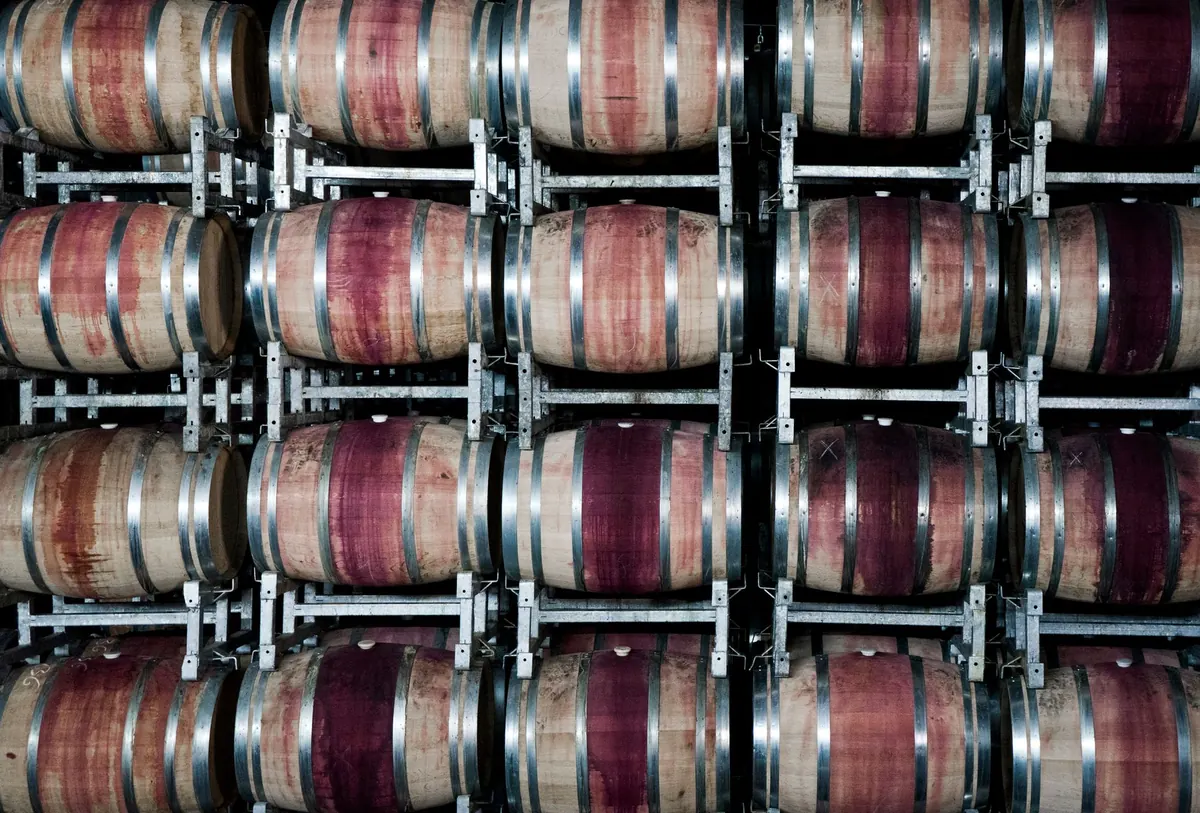
The fermenter is empty, the wine is dry, and one of the year's most consequential decisions is sitting in front of you. Whether that young wine goes into oak barrels or a stainless steel tank will shape what a drinker tastes months or years later: the fruit, the texture, the way it ages, and what the finished bottle has to cost. There is no universal right answer. There is only the answer that fits the fruit in front of you and the wine you intend to sell.
Stainless steel is close to inert. It holds wine, it chills it, it keeps oxygen out, and otherwise it stays out of the way. That sounds passive, and it is, which is exactly the point: a tank preserves what the vineyard and the fermentation gave you, for better or worse.
Oak is the opposite. A barrel is a working material. It allows a slow, steady exchange of oxygen through the grain and between the staves, it gives up aromatic compounds from the wood and from the toasting, and it concentrates the wine slightly as water and alcohol evaporate through the wood over the months. A barrel is never neutral; even one four or five wines old is still doing something to the texture.
Then there is the physical reality. A barrique holds 225 litres, a puncheon or large cask several times that. A tank can hold thousands of litres, can be jacketed for temperature control, and can be cleaned with a pump and a hose in an afternoon. That difference in scale shapes everything from how many separate lots you can keep to how often you climb a ladder with a jug of sulfur solution.
The great strength of stainless steel is aromatic precision. Tank-fermented whites keep their citrus, green apple, white flowers and the flinty note that makes a cool-climate vineyard recognisable. Reds keep fresh red fruit — sour cherry, raspberry, cranberry — and a certain bright edge that oak can soften away. If your vineyard site produces something delicate and you want the bottle to say so plainly, a tank is often the honest choice.
Oak brings its own vocabulary: vanilla, cedar, clove, toast, coconut, smoke. French oak tends to be tighter, more savoury and spice-driven; American oak is more openly sweet and coconutty; heavy toast pushes char and coffee, while light toast leaves more of the raw wood character. A new barrel speaks loudly. By the third or fourth fill it is mostly a texture device with a faint whisper of wood.
The useful rule I keep coming back to: oak should sit underneath the fruit, not on top of it. If you can taste the barrel before you taste the vineyard, the barrel has won.
The oxygen that seeps through oak staves does quiet work. It helps soften aggressive tannin, encourages the polymerisation that stabilises colour, and rounds out the middle of the palate. Wines raised on their lees in barrel, with occasional stirring, build a creamy weight that tank wine rarely develops.
Stainless keeps the tension. It holds on to acidity and freshness, protects fragile aromatics, and lets you control temperature precisely during fermentation — a real advantage when you want a slow, cool ferment to preserve perfume in a white. What it will not do is soften a hard tannin structure or add body. If the wine is angular and you want it broader, no amount of tank time will fix it.
One more mechanic worth remembering: evaporation. In a small barrel, a wine can gain density and concentration over a year. Left untended, it can also dry out and oxidise. Barrels reward attention.
Some pairings that generally work well:
Notice that "oak" is not one thing. A new barrique and a well-used 500-litre cask both hold wine in wood, and they produce very different bottles.
New barrels are a serious recurring expense: each one is a capital item that will be replaced after a handful of fills, and the cost per litre stored is high because the volume is small. Stainless steel asks for more money up front but lasts for decades, and the cost per litre stored is far lower. For a small vineyard, the honest calculation often comes down to how much wine you make and how long you can afford to hold it.
Labour differs too. Barrels need a routine, every time:
Stainless needs cleaning, inert gas and temperature management, but its risks are simpler. Barrels carry a real spoilage risk if hygiene slips, and one contaminated barrel can quietly undo a lot of good work. Budget for that attention, not just the cooper's invoice.
Start with the fruit, not with the vessel. If the vineyard gave you delicate aromatics, protect them and use neutral wood only for texture. If it gave you density and tannin, give the wine oxygen and time. When you can, split a single lot and raise half in tank and half in barrel; tasting them side by side every six weeks teaches you more than any general rule, and the same exercise will tell you when to blend the two.
Be sparing with new wood, especially on the first vintage of a new wine, and remember that concrete and amphorae sit usefully between the two extremes. Keep notes on every barrel — coopers, toast, fill number — and taste with your customers in mind. The best vessel choice is the one that makes the wine taste like where it came from, with a little help you can actually taste.
Photo: Robert Schrader / Pexels
A practical guide to tasting room etiquette — from spitting and splitting pours to tipping and the...
A practical introduction to Sangiovese, Nebbiolo, Barbera and other Italian grapes, covering what each...
A practical guide to planning a harvest-season vineyard visit, covering when to book, what to wear, what...