Tasting Room Etiquette: 8 Rules for a Respectful Vineyard Tasting
A practical guide to tasting room etiquette — from spitting and splitting pours to tipping and the...

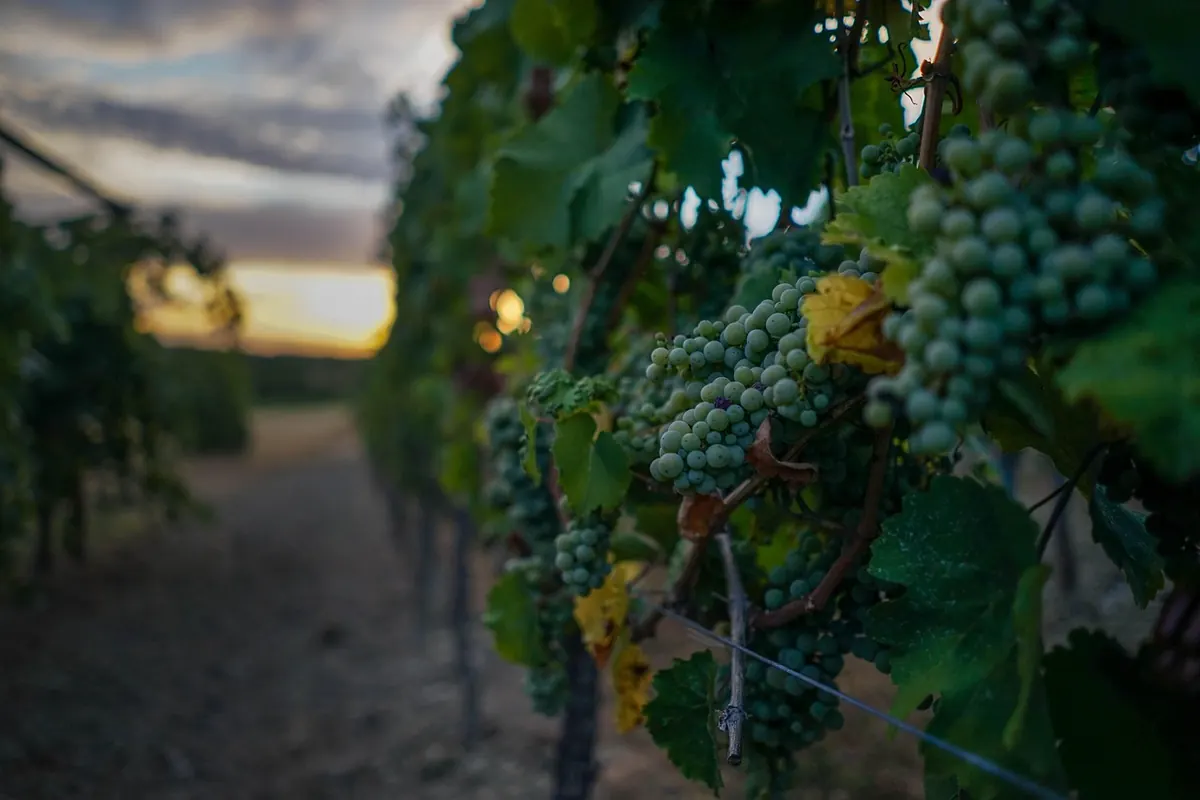
The first vineyard I helped prune had three neat rows of Guyot, one overgrown cordon nobody could quite remember planting, and a leaning pergola along the top wall that ripened a few baskets of grapes for the family table. All three systems worked. None of them would have suited the others' spot.
That is the honest starting point for anyone choosing a vine-training system. There is no universally better trellis, only a better fit for a particular slope, soil, variety, and pair of hands. Small vineyards make the choice more consequential, not less: you cannot average out a mistake across a hundred hectares, and you will live with the result for twenty years or more.
The shape you give a vine settles four things at once. It sets how much leaf surface catches light and where that light lands. It fixes how many buds you carry per vine, and therefore the crop. It determines how much air moves through the canopy, which is the difference between a clean season and a long fight with rot. And it decides how many hours you spend per vine each winter and summer.
Three practical questions do most of the sorting: how vigorous are the vines, how much labour can you realistically give them, and what does the climate demand? Answer those and the shortlist usually shrinks to one or two options.
A Guyot-trained vine carries a permanent trunk and, each winter, one or two canes laid horizontally along the fruiting wire, plus one or two renewal spurs near the head. Single Guyot uses one cane; double Guyot uses two, one on each side. The cane is last year's wood, chosen for health and pencil-thickness, and tied down so its buds are evenly spaced and evenly fed. The fruiting wire usually sits around 90 cm, with movable catch wires above to hold the shoots upright.
Guyot is the standard in cool-to-moderate climates with modest vigour: Burgundy, the Loire, parts of England and northern Europe, and plenty of small hillside plots in Italy where the soil is thin and the season short. Because you rebuild the fruiting wood annually, you can adjust bud numbers to the vine in front of you. That flexibility is worth a lot on a site with variable soil, uneven drainage, or late spring frosts, where you can leave extra canes as insurance and remove them once the danger has passed.
It is the most skilled and most labour-intensive of the three. Every vine needs a pruner who can choose the right cane, cut to the right bud number, and tie the thing down, then come back for shoot thinning, positioning, and trimming. The head of the vine also has to be watched over the years. Left alone it swells into a congested knot, and cane selection becomes guesswork. Keep a renewal spur low on the trunk whenever possible, so a damaged trunk can be replaced with a new one over two seasons rather than replanted.
A spur-pruned cordon replaces the annual cane with permanent horizontal arms, usually one or two, trained along a wire and carrying spurs every 15–20 cm or so. Each spur keeps two buds. The architecture does not change from year to year, which is exactly the point: a pre-pruner can run down the row and cut everything back to the arm in one pass, and a small team follows up by hand.
This system suits vigorous vines on deeper soils and warm sites where you want to spread growth along a wider wall of foliage rather than let it crowd upward. It also suits anyone whose winter pruning time is the real bottleneck. A tidy cordon can cut pruning hours substantially compared with Guyot.
The trade-offs are real. Your bud number is fixed by the spur positions, so you lose the ability to fine-tune crop load vine by vine, and spring frost decisions become blunter. The permanent arms are also a highway for trunk disease; if an arm is lost, half the vine goes with it. Older cordons get crowded at the head and along the arms, and the fruit zone can drift upward as spurs grow longer. Renewal is possible from watershoots, but it takes attention. And check the variety before you commit: some grapes crop reliably from basal buds, others are shy and prefer the longer canes of a Guyot.
The pergola lifts the canopy overhead, with trunks of 1.8–2.2 m and a horizontal roof of wire or timber carrying the shoots. It is a familiar sight in Trentino, the Veneto, and hot, steep sites across southern Europe, and it earns its place where vines grow too strongly for a vertical wall and where summer sun is brutal rather than welcome.
The advantages are mostly about space and stress. A big overhead canopy uses vigorous growth instead of fighting it. The fruit hangs in shade, which reduces sunburn and heat damage, and the soil beneath stays cooler and less prone to drying out. In hot climates, ripening is slowed into a more comfortable window. In a cool one, that same shade delays ripening, which is the last thing you need.
The disadvantages are just as clear. You will work from ladders for pruning, thinning, and picking. Spray coverage on the underside of a dense canopy is patchy unless you are careful with nozzles and air. Material costs are the highest of the three, and converting an existing vertical trellis to a pergola is really a retraining project measured in years. In humid climates, a thick pergola roof holds moisture and invites trouble. Choose it for heat, vigour, steep slopes, or a genuinely shaded garden, not because it looks romantic.
On a small vineyard, labour is the currency that matters most; capital costs for posts and wire are similar enough between Guyot and cordon that they rarely decide the question. Use this as a rough filter:
Whatever you choose, build the trellis once and build it properly. End posts need real bracing and earth anchors, line posts need depth, and wire needs in-line strainers so you can tension it after the first hot summer slackens it. A row that sags by year three will ruin your pruning geometry for the next two decades.
If you are planting from scratch, decide before the posts go in, because changing your mind later is expensive. If the vineyard already exists, give yourself a full season of observation before altering anything: note where the vines are strongest, where fruit ripens late, where you run out of time.
Fifteen minutes with a notebook each week will teach you more about your site than any general recommendation. The vines have been answering the question all along.
Photo: jusuf111 / Pixabay
A practical guide to tasting room etiquette — from spitting and splitting pours to tipping and the...
A practical introduction to Sangiovese, Nebbiolo, Barbera and other Italian grapes, covering what each...
Oak barrels and stainless steel tanks shape flavour, texture, cost and style very differently; here is how...